
The Aortic Clamp
An exploration of the aortic clamp — its role in vascular surgery, technical nuances, and the clinical decisions that surround its use.
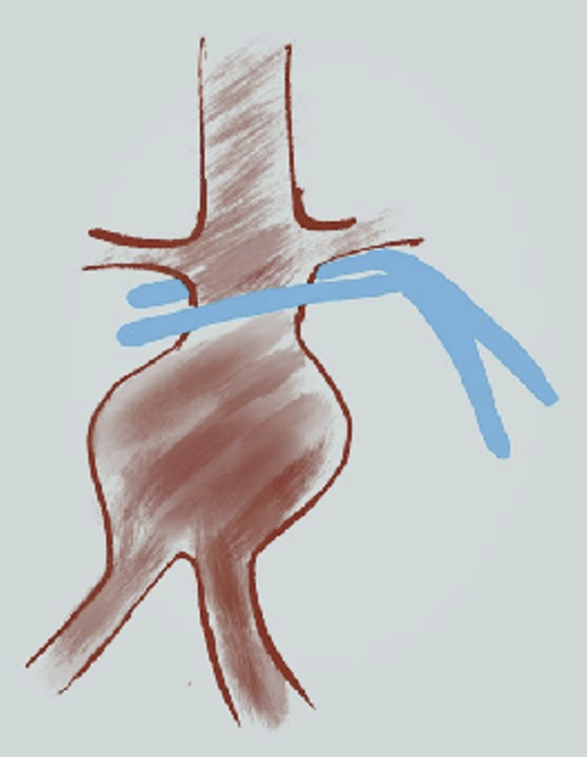
“We are going to clamp in 3-2-1, CLAMP!” 🔴
How often have we heard this in the OR? But why all the fuss?
This is a natural question that we ask when we begin our journey into understanding vascular physiology. After all, vascular surgeons cross-clamp various different arteries in the body each time they operate. So what is different here?
This is a complex phenomenon, and one that is still not fully understood. However, a large part of it is due to uncertainties of the “Anrep effect” and what it means for the heart.
It is well-known that the subendocardial layer of the heart is more prone to ischaemia, attributed often to both the distribution as well as the structure of the coronary vasculature.
When the aorta is cross-clamped, the systolic pressure naturally escalates. This leads to an increased back-pressure and an acute dilatation of the left ventricle.
This in turn results in the compression of subendocardial vessels causing ischaemia.
The Anrep effect is the cardiac reflex that re-balances this problem by increasing contractility. It does so by local autoregulation and reperfusion of the affected areas. Patients with pre-existing cardiac disease can be fatally affected if this response is suboptimal. In addition to this, there are a myriad of other variables to consider such as surgical bleeding, anaesthesia technique, fluid management, and chronic medications such as beta-blockers or CCBs.
Now you know why the surgeon and the anaesthetist have to coordinate in sync to maintain ambient pressure throughout the clamp time.
“Clamp coming off in 3-2-1!” 🔵

Dr. Pradip Malayilparambil Abraham
MBBS, MS (Gen), MCh (Vasc), MRCS, FRCS (Vasc)
Consultant Vascular & Endovascular Surgeon · Medical Trust Hospital, Kochi
Have a Vascular Concern?
Medical Trust Hospital · MG Road, Kochi · Mon–Sat 9 AM–5 PM